Disclosure: We may earn a small commission if you purchase through links on this page. No additional cost to you. We just want to be transparent about how we fund this site.
Brooks vs Skechers for Ankle Instability
A firm-heel stability trainer built for straight-ahead motion against a court shoe built for cutting and direction changes.
We don't just recommend shoes. We explain why they work for your feet.
What You Need to Know First
Ankle instability usually develops after one or more sprains stretch the lateral ligaments beyond their normal range, leaving the joint prone to rolling again under less force than it used to take. The most important footwear feature is a firm heel counter that keeps the heel seated and resists inversion, paired with a broad midsole base that shortens the lever arm the ankle can roll over. Secure midfoot lockdown through lacing matters as much as the shoe's structure, since a loose fit undermines even the best-built heel counter.
Ankle instability from a history of sprains does not stress the ankle the same way in every activity. Walking and running load it in a fairly predictable, straight-ahead pattern. Pickleball, tennis, and other court sports load it through sudden lateral cuts and direction changes, which is a fundamentally different demand on the same joint. Brooks and Skechers both build genuinely APMA-accepted stability shoes here, but for those two different situations. The Adrenaline GTS 25 is built around gait control for forward motion. The Viper Court is built around a lateral reinforcement chassis specifically engineered to resist inversion during rapid side-to-side movement.
Specs Compared
Factual specs only. No brand is favored. You decide what matters most for your feet.
Which One Is Right for You?
Both are excellent. Here is the honest case for each based on your specific situation.

Brooks Adrenaline GTS 25
$150-$160
Choose this when
Your ankle instability shows up during walking, running, or everyday movement rather than sport-specific cutting and pivoting. The Adrenaline GTS 25 pairs one of the firmest heel counters in the stability category with a GuideRails system that controls excess motion without overcorrecting your natural gait, and its 10mm heel drop keeps the subtalar joint positioned securely through a normal stride. Five width options also make it easier to get a locked-in fit, which matters as much as the shoe's structure for actually preventing re-injury.
GuideRails holistic support system controls excess movement without overcorrecting
DNA Loft v3 nitrogen-infused cushioning for lightweight plush comfort
APMA Seal of Acceptance pid=9201 - PDAC A5500 diabetic shoe certified - verified directly from APMA Seal Database May 2026
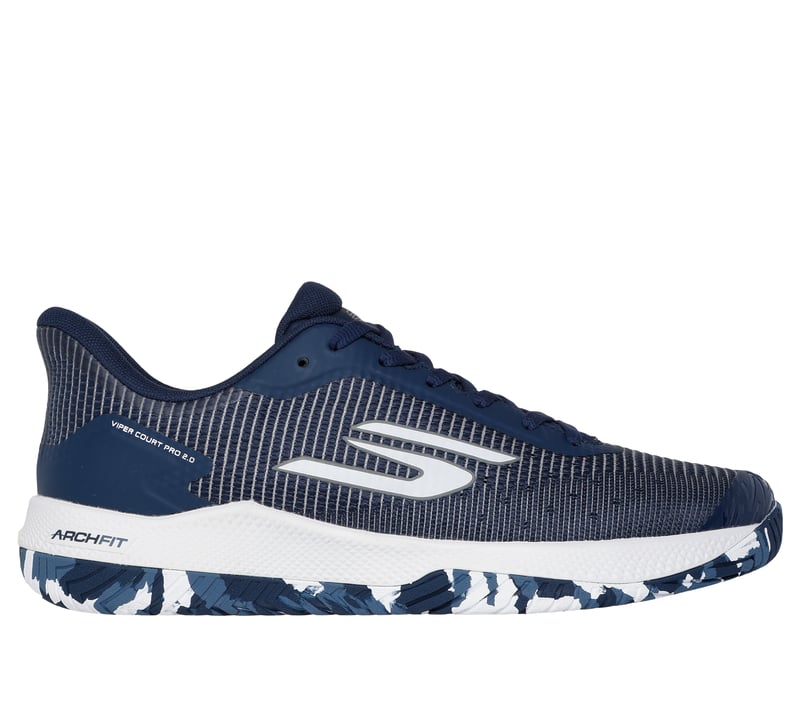
Skechers Viper Court Pickleball
$80-$100
Choose this when
Your ankle rolls or feels unstable specifically during court sports - pickleball, tennis, or similar games built around sudden direction changes. The Viper Court's lateral reinforcement chassis is engineered specifically to resist the side-to-side forces a running shoe was never designed to handle, and its non-marking herringbone outsole is built for the indoor and outdoor court surfaces those sports are actually played on. It is also the lower-priced option of the two, and its low 8mm drop keeps the ground feel that precise footwork on a court requires.
APMA Seal of Acceptance pid=8972 - Skechers Viper Court Pickleball - verified directly from APMA Seal Database May 2026
Non-marking herringbone outsole engineered for indoor and outdoor court surfaces - approved for pickleball, tennis, and racquet sports
Lateral reinforcement chassis controls side-to-side movement forces - reduces ankle inversion risk during rapid direction changes
The Honest Verdict
Both shoes are APMA accepted for genuinely different stress patterns on an unstable ankle. If your instability is a general, everyday, straight-ahead concern, the Adrenaline GTS 25's heel counter and GuideRails system are purpose-built for that. If your ankle specifically gives out during court sports, a running shoe's stability features do not translate to lateral cutting the way the Viper Court's chassis does. Many people managing ankle instability across both an active lifestyle and a specific sport end up needing both, since neither shoe is designed to cover the other's use case well.
Answer These. Then Decide
Four quick questions that point you toward the right shoe for your specific situation.
Does your ankle instability mainly show up during walking or running rather than sport-specific movement?
Do you play pickleball, tennis, or another court sport with frequent direction changes?
Do you need a precise width fit across multiple sizing options?
Is budget a significant factor in your decision?
Frequently Asked
Which is better for ankle instability - Brooks or Skechers?
It depends entirely on the activity. The Brooks Adrenaline GTS 25 is built for everyday walking and running stability. The Skechers Viper Court is built specifically for the lateral cutting motion of court sports like pickleball and tennis. A running shoe's stability features do not transfer well to court movement, and vice versa.
Can a running shoe prevent ankle sprains during pickleball?
Not as effectively as a court-specific shoe. Running shoes are built to control forward gait, not the sudden lateral direction changes that cause most ankle sprains in racquet sports. A shoe with a dedicated lateral reinforcement chassis, like the Viper Court, addresses that specific risk directly.
What is the most important shoe feature for ankle instability?
A firm heel counter that keeps the heel seated and resists inversion is the single most important feature, followed by a broad midsole base and secure midfoot lockdown through lacing. Both shoes in this comparison deliver this, just tuned for different movement patterns.
Does a higher shoe collar help with ankle instability?
Collar height offers a supplemental benefit in high-risk activities, but it does not replace a firm heel counter and a broad midsole base as the primary stability features. Neither the Adrenaline GTS 25 nor the Viper Court relies on collar height as its main stability mechanism.
Related Comparisons
Still Not Sure Which Is Right for You?
Take our guided quiz and get a personalized recommendation based on your specific foot condition, activity level, and concerns. We explain exactly why each shoe fits your feet.