Disclosure: We may earn a small commission if you purchase through links on this page. No additional cost to you. We just want to be transparent about how we fund this site.
New Balance vs Altra for Posterior Tibial Tendinitis
Aggressive traditional motion control against a zero-drop stability shoe built around natural mechanics - which approach fits your case?
We don't just recommend shoes. We explain why they work for your feet.
What You Need to Know First
Posterior tibial tendinitis develops when the tendon running along the inside of the ankle becomes inflamed or overstretched, usually from repetitive overpronation. Left unmanaged, it can progress into adult-acquired flatfoot as the arch loses its main structural support. Footwear needs to resist that inward rolling directly, hold the arch with a firm medial post, and pair with a stable heel counter. A removable insole matters too, since many people with this condition eventually need a custom orthotic alongside their shoes.
Posterior tibial tendinitis puts the tendon that supports your arch under constant strain, and once that tendon weakens, the arch itself can start to collapse. Motion control is not optional here the way it might be for a milder condition - it is the entire point. New Balance and Altra both build genuinely stability-focused shoes for this, but from opposite design philosophies. New Balance leans on the traditional playbook: a rigid ROLLBAR post and an elevated platform built for severe, progressing cases. Altra takes an unusual path for a stability shoe - zero heel elevation, paired with guide rails that steer the foot without locking it into a fixed motion path.
Specs Compared
Factual specs only. No brand is favored. You decide what matters most for your feet.
Which One Is Right for You?
Both are excellent. Here is the honest case for each based on your specific situation.

New Balance 1540v4
$195-$205
Choose this when
Your posterior tibial dysfunction is already advanced, with visible arch collapse or a podiatrist-confirmed diagnosis of moderate to severe overpronation. The 1540v4's ROLLBAR system and ENCAP midsole were built specifically for cases at this stage, and six available widths mean you can get a precise fit without the compensatory gait changes that come from wearing a shoe that does not fit correctly. This is the more conservative, clinically aggressive option when the tendon damage is significant.
Extra depth design accommodates custom orthotics
ROLLBAR motion control technology for severe overpronation
ABZORB cushioning for impact absorption
Altra Paradigm 7
$160-$170
Choose this when
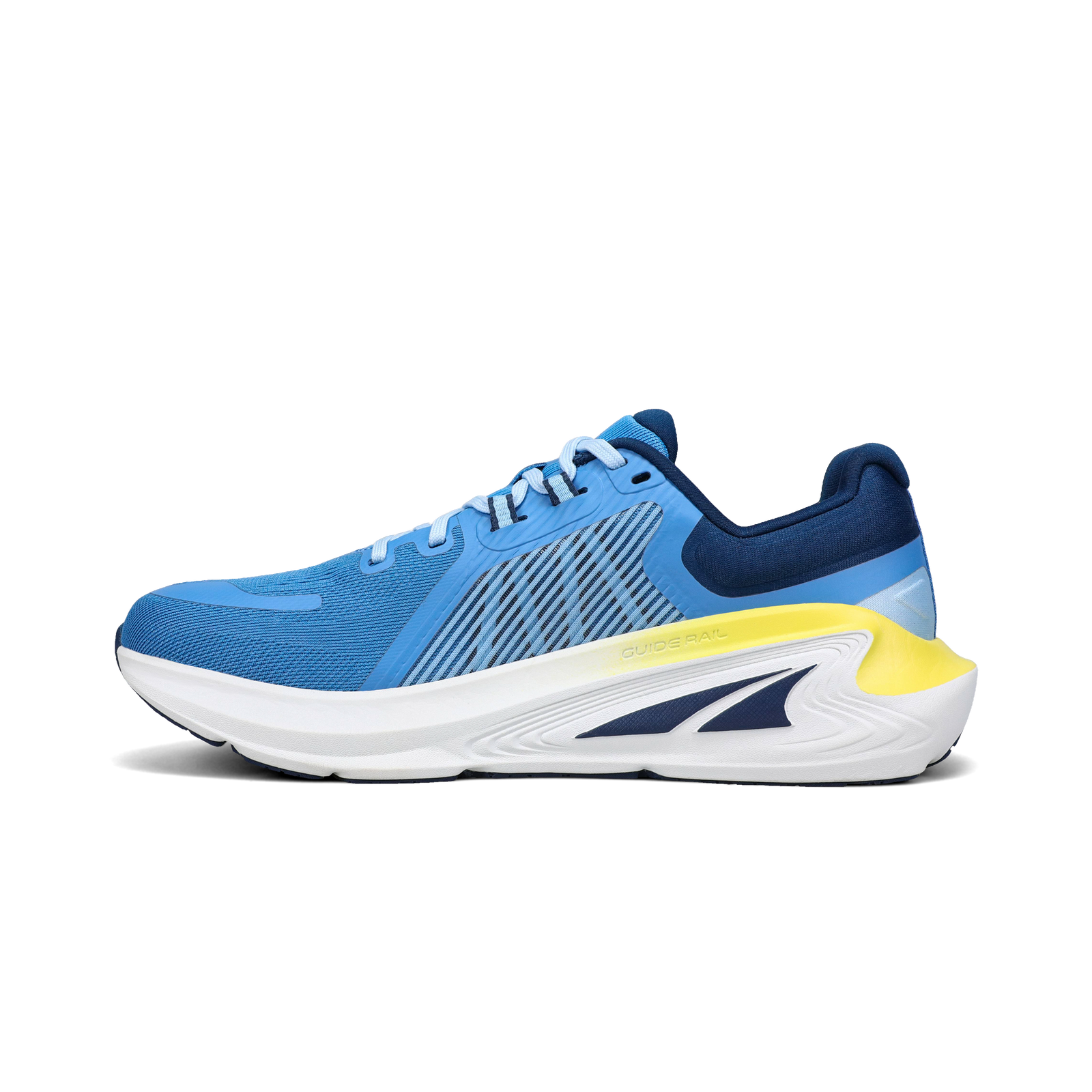
You want real medial support without giving up the sense of natural foot movement, or your podiatrist has specifically recommended avoiding an elevated heel to protect your Achilles and calf function alongside the tendon issue. The Paradigm 7's GuideRails resist the overpronation that overloads the posterior tibial tendon while its zero-drop platform keeps your foot working the way it was built to, rather than compensating for an artificial heel lift. It is also the wider-toe-box option of the two, which matters if bunions or general forefoot crowding are part of the picture.
FootShape toe box with 82.3mm toe box width - significantly above the 73.3mm average - ideal for wide feet, bunions, and natural toe splay
GuideRails stability system guides the foot to toe-off from under the big toe without stopping natural pronation motion
Zero-drop platform with 30mm EGO MAX midsole - maximum cushioning without heel elevation that shortens the Achilles tendon
The Honest Verdict
Both shoes are APMA accepted and specifically address the overpronation mechanism behind posterior tibial tendinitis, just through different structural philosophies. The 1540v4 is the more traditional, clinically conservative choice for cases where arch collapse has already progressed and maximum correction is the priority. The Paradigm 7 is worth strong consideration if you want stability without an elevated heel platform, or if your case is earlier-stage and you and your podiatrist agree a less rigid approach is appropriate.
Answer These. Then Decide
Four quick questions that point you toward the right shoe for your specific situation.
Has your arch collapse already progressed to a moderate or severe stage?
Has a podiatrist advised against an elevated heel for your Achilles or calf?
Do you also deal with bunions or a need for extra forefoot room?
Do you need a precise width fit across multiple sizing options?
Frequently Asked
Which is better for posterior tibial tendinitis - New Balance or Altra?
Neither is universally better. The New Balance 1540v4 is the stronger choice for advanced cases with significant arch collapse, since its ROLLBAR system delivers more aggressive correction. The Altra Paradigm 7 is the stronger choice when you want real medial support without an elevated heel platform, often for earlier-stage cases or when protecting the Achilles is also a priority.
Is a zero-drop shoe safe for posterior tibial tendinitis?
It can be, but it depends on the severity of your case and what your podiatrist recommends. The Altra Paradigm 7 pairs its zero-drop platform with genuine stability features specifically to resist overpronation, but a zero-drop design is not the traditional approach for advanced arch collapse the way a motion control shoe like the 1540v4 is.
Can these shoes be used with a custom orthotic?
The New Balance 1540v4 is an extra-depth design specifically built to accommodate custom orthotics. The Altra Paradigm 7 also has a removable footbed, though its zero-drop platform means an orthotic will change the feel of the shoe more noticeably than in a traditionally elevated design.
Does posterior tibial tendinitis always require a motion control shoe?
Motion control or maximum stability is the standard footwear recommendation because the condition is driven by overpronation that the tendon can no longer resist on its own. Within that requirement, there is still a real choice between a traditional elevated motion control build and a zero-drop stability alternative like the Paradigm 7.
Related Comparisons
Still Not Sure Which Is Right for You?
Take our guided quiz and get a personalized recommendation based on your specific foot condition, activity level, and concerns. We explain exactly why each shoe fits your feet.