Disclosure: We may earn a small commission if you purchase through links on this page. No additional cost to you, and we only recommend products we trust. This helps us keep MySoleMatch free and ad-free. Thank you for your support!
Edema (Swollen Feet and Ankles)
Edema is the medical term for fluid buildup in the soft tissues, and in the feet and ankles it is one of the most common reasons people suddenly can't fit into their regular shoes. Most cases are benign and related to pregnancy, long periods of standing or sitting, hot weather, or the natural decline in vein and lymphatic efficiency that comes with aging. Footwear plays a real role in both comfort and safety, since a shoe that fits perfectly in the morning can become painfully tight by evening as swelling builds through the day. In a smaller number of cases, foot and ankle swelling is an early sign of a circulatory, cardiac, kidney, or liver issue that needs medical attention, which is why sudden or one-sided swelling should never be treated as a fit problem alone.
Signs You May Have Edema (Swollen Feet and Ankles)
Visible puffiness or swelling in the feet, ankles, or lower legs
Skin that looks stretched, shiny, or feels tight
An indentation that stays briefly after pressing on the skin (pitting)
Shoes, socks, or sandal straps that leave deep marks or feel tight by evening
A heavy or achy feeling in the feet and lower legs
Swelling that is worse at the end of the day and improves overnight or with elevation
Difficulty fitting into shoes that normally fit well
Walk Into Your Appointment With Answers
Before Your Next Appointment
Take Your Results to Your Podiatrist
Answer a few quick questions. Takes under 2 minutes. Get personalized shoe recommendations.
Best Shoes for Edema (Swollen Feet and Ankles) | MySoleMatch
Footwear for edema needs to accommodate fluctuating volume throughout the day rather than a single fixed measurement. Stretch or adjustable uppers, such as elastic panels, hook-and-loop closures, or lace-up designs with room to loosen, allow a single pair of shoes to work in the morning and evening alike. Extra depth construction prevents the top of the foot from being compressed as swelling increases. Rigid structured uppers and shoes with a snug, fixed fit should be avoided, since they can create pressure points or restrict circulation further. Width should typically start at 2E and go up to 4E depending on the degree of swelling, and if compression socks are part of a person's care plan, the shoe needs enough internal volume to accommodate that added bulk without pinching.
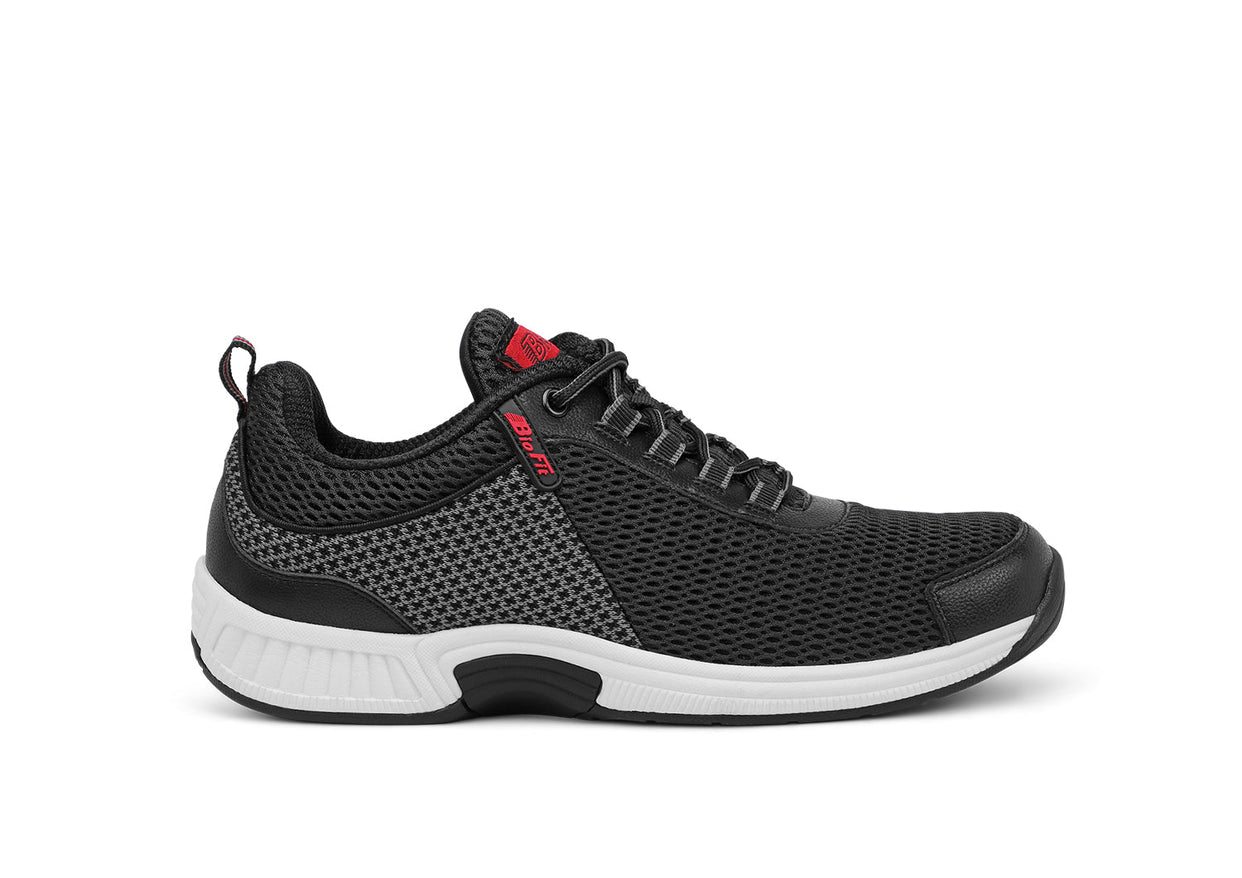
Orthofeet Edgewater
$129-$145
Why this shoe
Stretch upper actively conforms around fluctuating swelling rather than just providing extra volume, and the extra-depth construction accommodates a foot that changes size throughout the day. Available in widths up to 4E, and PDAC A5500 diabetic certified if that applies to you.
Biomedical-engineered extra-depth design accommodates custom orthotics
Stretch upper eliminates pressure on bunions, hammertoes, and swollen feet
Ergonomic Stride outsole with mild rocker reduces plantar fascia strain
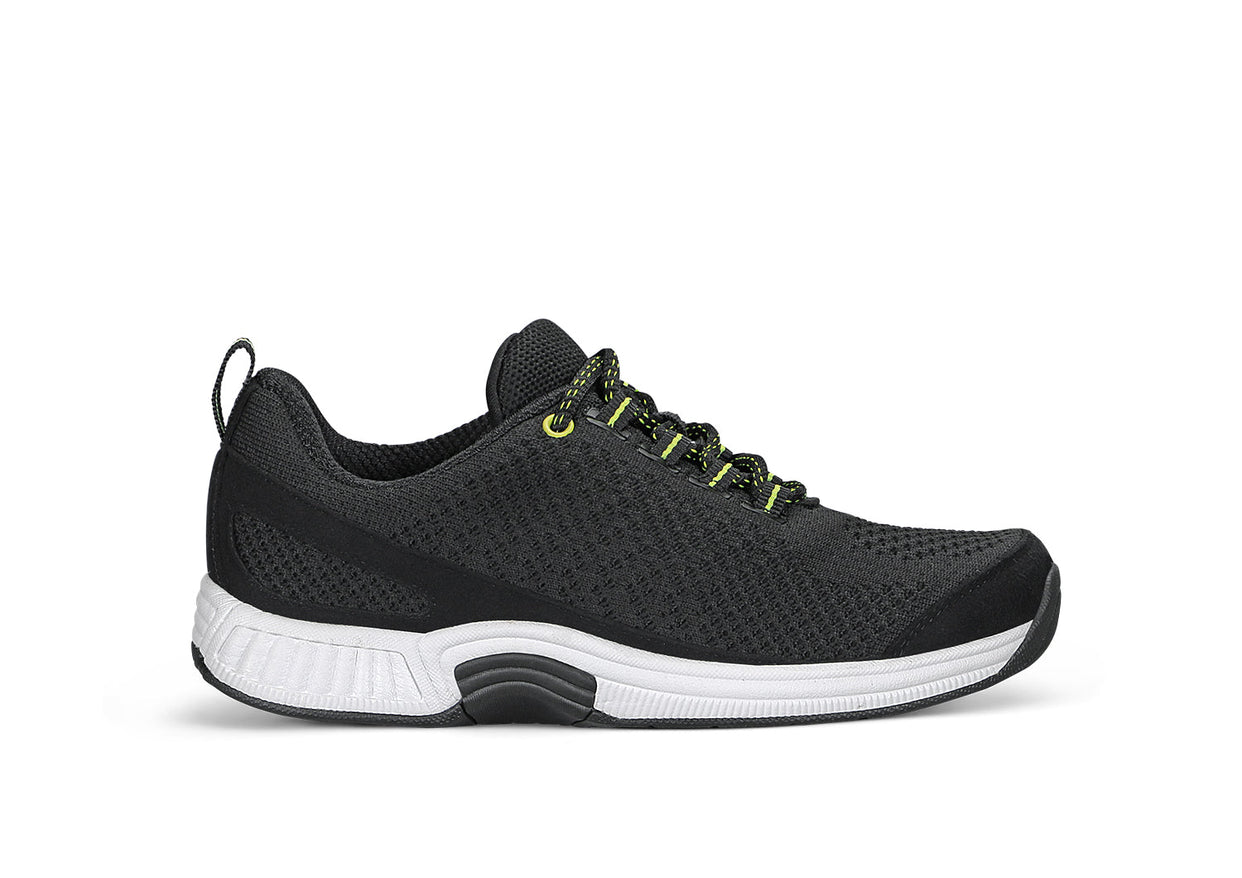
Orthofeet Coral
$129-$145
Why this shoe
Extra-depth stretch knit upper accommodates swelling without applying compression, with a gel heel cup for added comfort during long periods of standing or sitting. PDAC A5500 diabetic certified.
Women's equivalent of the Edgewater - biomedical-engineered extra-depth design
Stretch knit upper relieves pressure on bunions, hammertoes, and swollen feet
Deep heel cup with gel cushioning for plantar fasciitis and heel pain relief
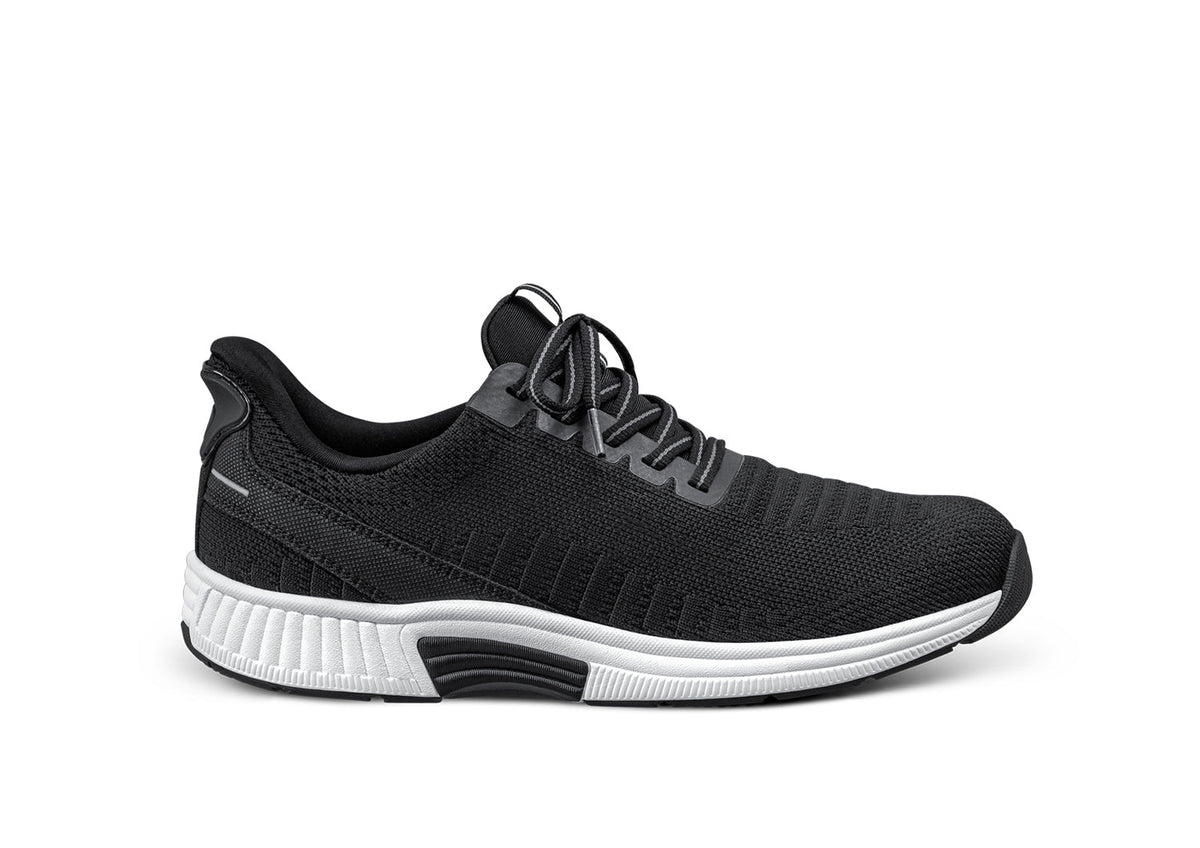
Orthofeet Kita
$130-$160
Why this shoe
Hands-free heel spring entry means no bending or squeezing a swollen foot into a tight opening, which matters most on days when swelling is at its worst. Water-repellent stretch upper accommodates volume changes throughout the day.
APMA Seal of Acceptance pid=9248 - Orthofeet Kita - verified directly from APMA Seal Database September 2026
Hands-Free Easy On/Off heel spring allows entry without bending or using hands
Multi-Layer Ortho-Cushion system with ergonomic sole and mild rocker for reduced impact
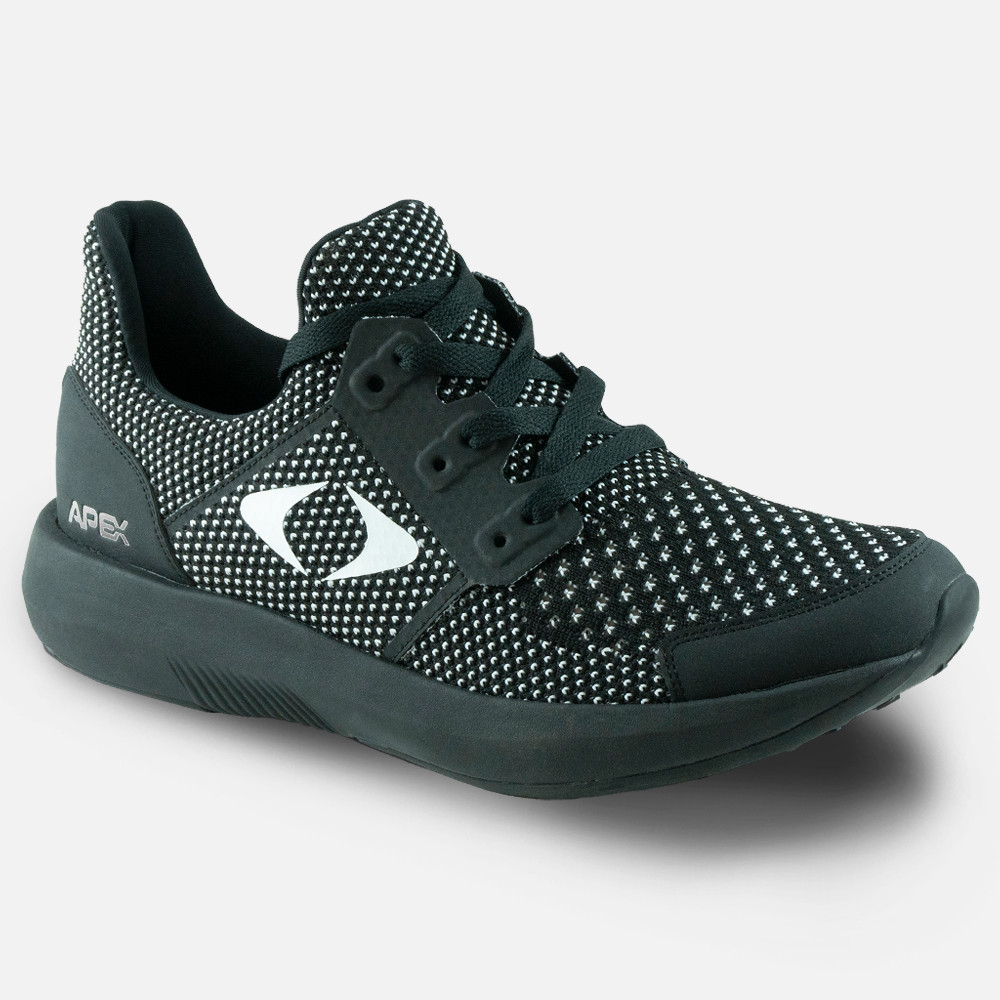
Apex Performance Athletic Sneaker Men's
$115-$165
Why this shoe
Slip-on construction with a stretchable upper is specifically designed to accommodate swelling and foot deformities, with a rigid heel counter for stability. Available in three width options including extra-wide. This shoe does not currently carry the APMA Seal of Acceptance, but is widely used and recommended in medical and orthopedic foot care settings.
Recommended by thousands of medical professionals for diabetic and orthopedic foot care
Breathable open mesh upper with rigid heel counter for rearfoot stability
Slip-on construction with stretchable upper accommodates swelling and foot deformities
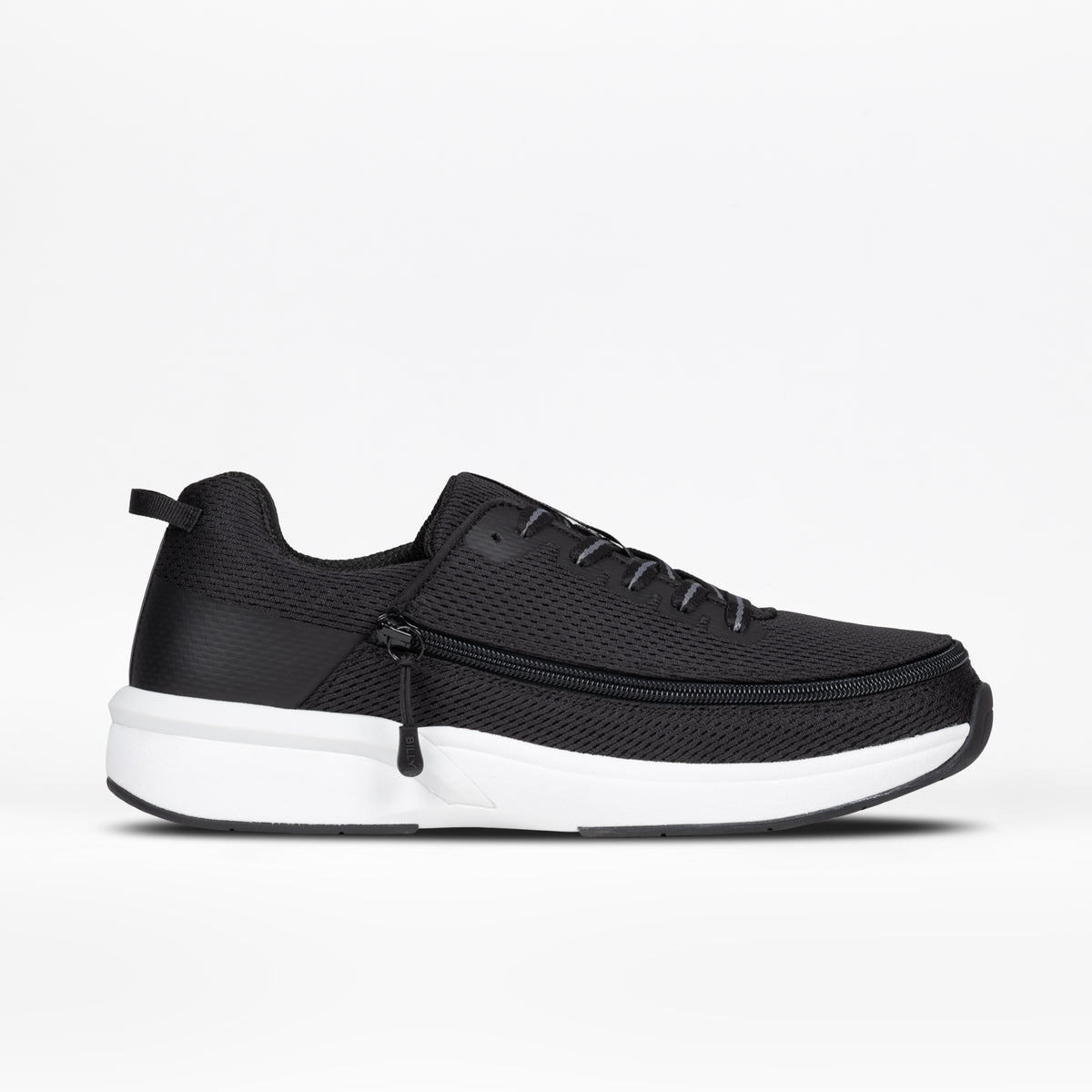
BILLY Limitless Men's Adaptive Shoe
$165-$175
Why this shoe
FlipTop full wrap-around zipper opens the entire shoe, eliminating the need to force a swollen foot through a tight opening on high-swelling days. Available up to 6E extra-wide, and removable stackable insoles let you fine-tune depth as swelling changes. This shoe does not currently carry the APMA Seal of Acceptance, but is purpose-built and marketed specifically for edema and lymphedema.
FlipTop full wrap-around zipper opens the entire shoe for easy step-in entry, eliminating the need to force a swollen foot through a tight opening
Available up to 6E extra-wide, among the widest options in the catalog
Removable, stackable insoles let you fine-tune depth and volume as swelling changes
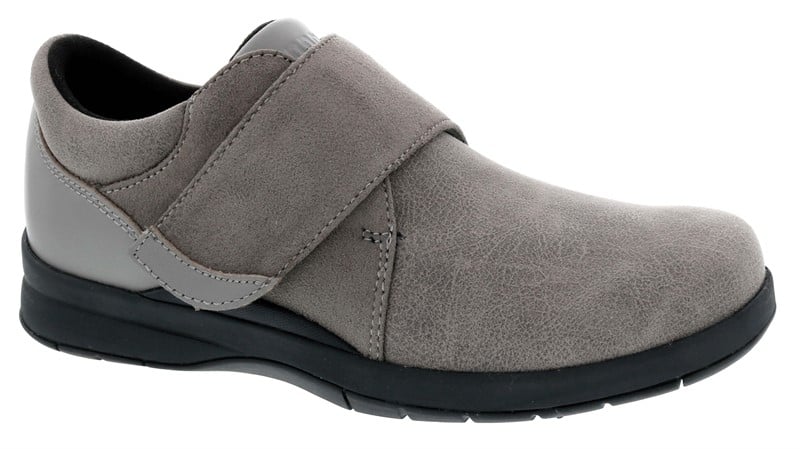
Drew Moonwalk Women's Stretch Shoe
$140-$150
Why this shoe
Plus Fitting System provides two removable footbeds for added or double depth, and the stretch vamp upper accommodates changing foot volume without rubbing. Carries HCPCS code A5500, the diabetic shoe billing code. This shoe does not currently carry the APMA Seal of Acceptance, but is a well-established therapeutic shoe widely used in podiatric and orthotic fitting settings.
Plus Fitting System with two removable footbeds for added and double depth, accommodating custom orthotics or AFOs
Stretch vamp upper reduces rubbing and accommodates edema, bunions, and changing foot volume through the day
Single adjustable hook-and-loop strap with a large opening for easy on and off
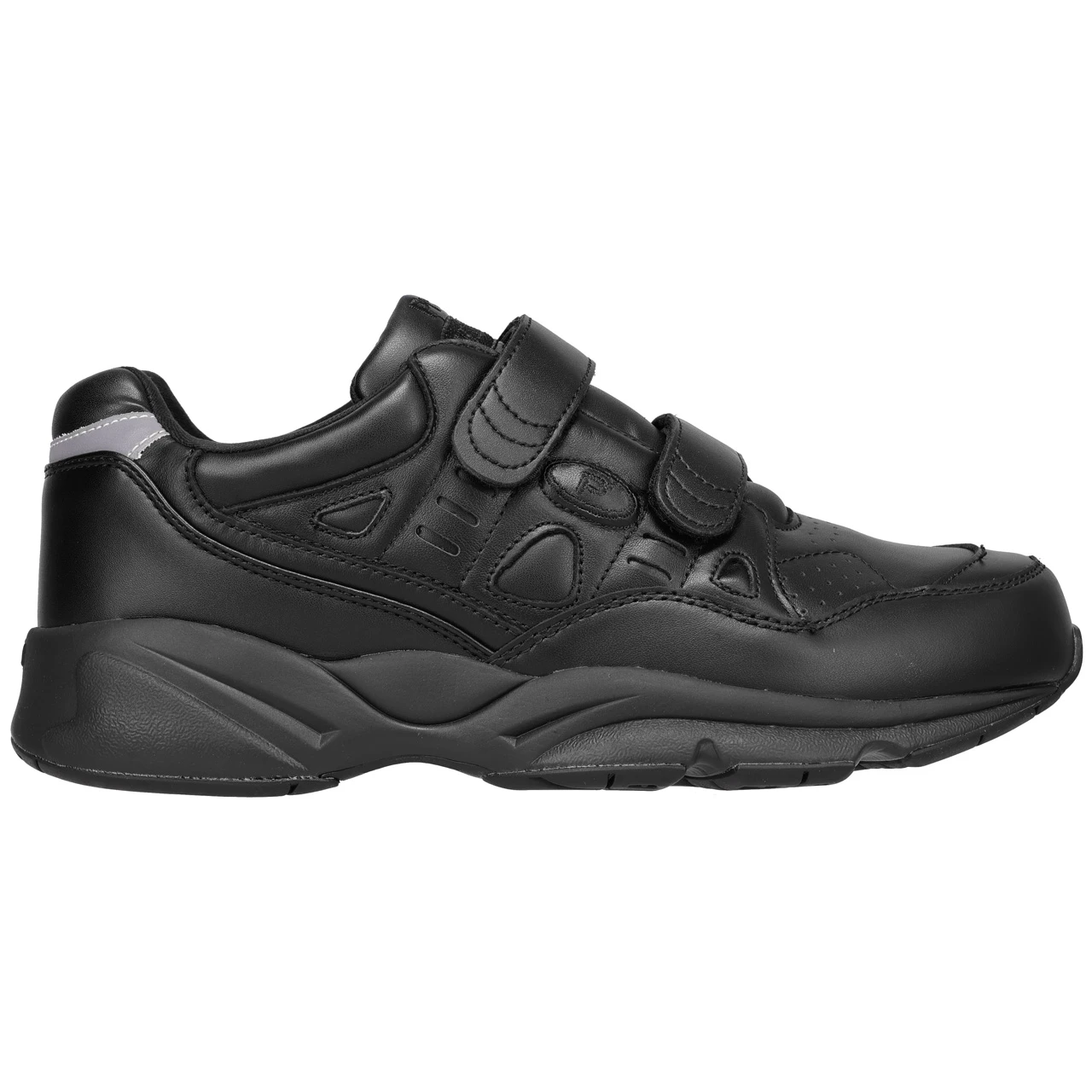
Propet Stability Walker Strap Men's Shoe
$110-$125
Why this shoe
Two independently adjustable hook-and-loop straps allow real-time fit changes as swelling fluctuates through the day, rather than being locked into a fixed-volume laced shoe. Available up to 5E extra-wide. Carries HCPCS code A5500. This shoe does not currently carry the APMA Seal of Acceptance.
Diabetic approved shoe, HCPCS code A5500
Two adjustable hook-and-loop straps allow real-time fit changes as swelling fluctuates through the day
Full grain leather upper with perforations for added breathability
What to Look for in a Shoe
Evidence-based footwear criteria specific to this condition.
Heel Drop
Recommended: 4-12mm
Heel drop is not the primary variable for edema. Choose a drop based on any co-existing condition such as plantar fasciitis, as long as the shoe is available with an adjustable or stretch fit.
Cushioning
moderate
Moderate cushioning supports comfort without adding unnecessary bulk that could further restrict an already tight-fitting shoe as swelling increases through the day.
Avoid: minimalist, rigid_structured
Stability vs. Neutral
depends_on_cause
Edema itself does not require a specific stability category. Choose based on any co-existing biomechanical condition, since fit and adjustability matter more for edema than stability classification.
Exception: Always prioritize an adjustable, non-restrictive fit over stability category when the two conflict.
Width
Recommended: 2E, 4E
2E is a reasonable starting width for mild to moderate swelling. 4E is often necessary for more significant edema or when compression socks are worn underneath the shoe.
Insoles and Orthotics
A removable insole is helpful so the shoe's internal volume can be adjusted as needed, and enough depth should be available to accommodate compression socks without creating pressure at the toe box ceiling.
What Is Happening in Your Foot
Edema happens when fluid that would normally stay inside blood vessels leaks into the surrounding soft tissue and accumulates, most often in the lowest parts of the body due to gravity. In the feet and ankles this shows up as visible puffiness, tight-feeling shoes, and sometimes an indentation that lingers briefly after pressing on the skin. Pregnancy, prolonged standing or sitting, heat, and the natural aging of veins and lymphatic vessels account for the large majority of cases. A smaller number of cases reflect an underlying circulatory, cardiac, kidney, or liver issue, which is why sudden, one-sided, or symptom-accompanied swelling deserves medical evaluation rather than a shoe change.
Biomechanics
Normally, the pressure inside veins and lymphatic vessels keeps fluid contained while one-way valves and the pumping action of leg muscles help return that fluid toward the heart. When venous or lymphatic function weakens, when venous pressure increases from prolonged standing or pregnancy, or when systemic conditions raise overall fluid retention, fluid moves out of the vessels into the surrounding interstitial tissue faster than it can be returned. Because gravity pulls fluid toward the lowest point of the body, the feet and ankles accumulate this excess fluid most visibly, and swelling typically builds through the day and improves overnight when the legs are horizontal and muscle pumping from walking is no longer needed to overcome standing pressure.
What Makes It Worse
Standing or sitting in one position for extended periods without moving
Hot weather or prolonged sun exposure
High sodium intake
Tight socks, stockings, or shoes with rigid, fixed-fit uppers
Long flights or car rides with limited leg movement
Advancing pregnancy, particularly the third trimester
What Helps
Elevating the feet above heart level when resting
Walking and moving periodically to activate the calf muscle pump
Wearing properly fitted compression socks when recommended by a doctor
Choosing adjustable or stretch-fit footwear that accommodates volume changes
Reducing sodium intake
Staying hydrated, since dehydration can paradoxically worsen fluid retention
Frequently Asked Questions
Related Guides and Resources
Walk Into Your Appointment With Answers
Before Your Next Appointment
Take Your Results to Your Podiatrist
Answer a few quick questions. Takes under 2 minutes. Get personalized shoe recommendations.
Not Sure Which Shoe Is Right?
Take our guided quiz and get a personalized recommendation based on your specific foot condition and lifestyle.
Start the Quiz