Disclosure: We may earn a small commission if you purchase through links on this page. No additional cost to you. We just want to be transparent about how we fund this site.
HOKA Clifton 10 vs ASICS GEL-Kayano 32 for Peroneal Tendinitis
A firm heel counter for high arches versus mild stability for overpronation. Two different root causes of the same outer ankle pain.
We don't just recommend shoes. We explain why they work for your feet.
What You Need to Know First
Peroneal tendinitis occurs when one or both peroneal tendons running along the outer ankle become inflamed from overuse or repetitive stress. These tendons are the primary stabilizers of the ankle against inversion, firing with every step to prevent the foot from rolling outward. When overloaded, they become inflamed, thicken, and cause pain along the outer ankle and foot. Footwear that cushions lateral impact, supports the ankle, and reduces the mechanical demand on the peroneal tendons is a primary component of conservative treatment.
Peroneal tendinitis affects the tendons running along the outer ankle, and the right shoe depends heavily on your foot type and gait. High-arch feet tend to supinate, rolling outward and placing extra strain on those tendons, while some cases are actually driven by mild overpronation instead. The HOKA Clifton 10 is the top podiatrist recommendation for high-arch peroneal tendinitis, using a firm heel counter to limit excessive ankle inversion alongside high-stack neutral cushioning. The ASICS GEL-Kayano 32 takes a different approach for cases where mild overpronation is a contributing factor, using its 4D Guidance System to stabilize the foot without over-correcting. Getting this one right depends on knowing which mechanical pattern applies to you.
Specs Compared
Factual specs only. No brand is favored. You decide what matters most for your feet.
Which One Is Right for You?
Both are excellent. Here is the honest case for each based on your specific situation.
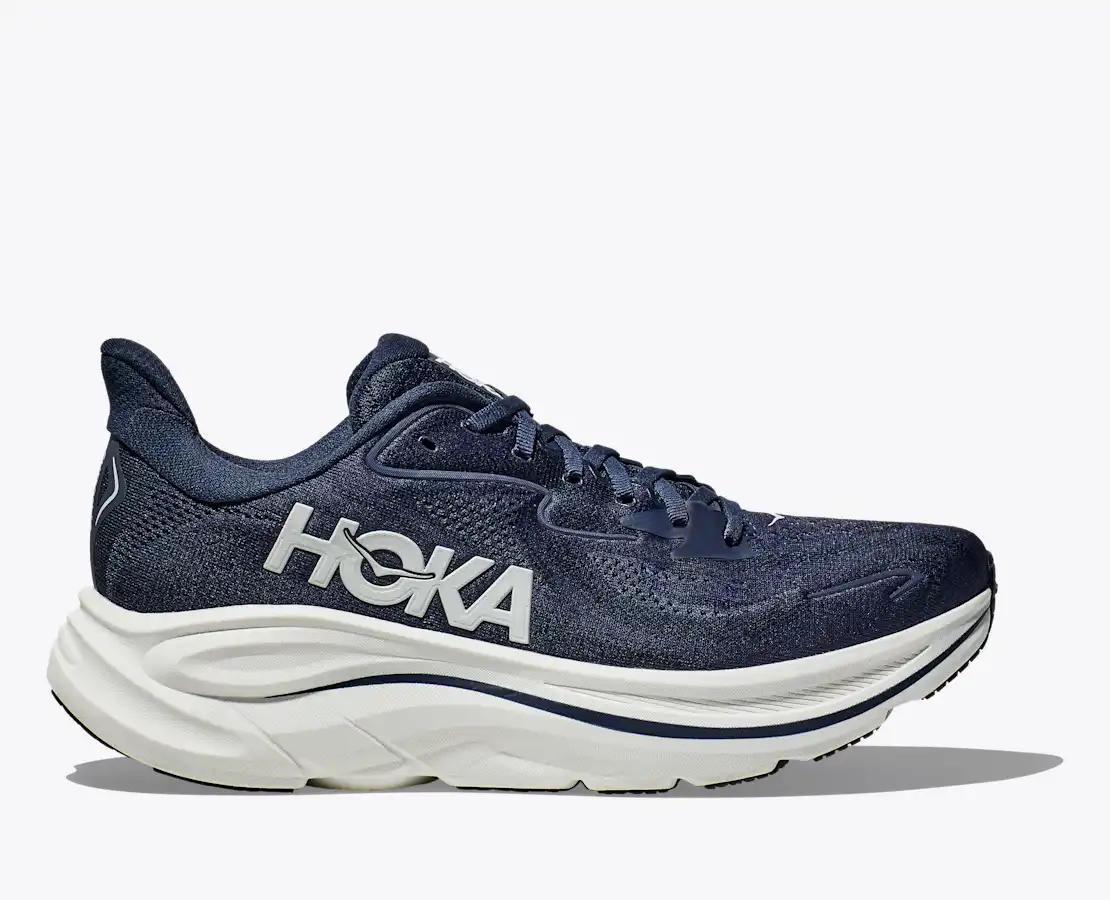
HOKA Clifton 10
$145-$160
Choose this when
You have high arches and a tendency toward supination, meaning your foot rolls outward rather than inward. The Clifton 10's high-stack neutral cushioning absorbs lateral impact forces that load the peroneal tendons, and its firm heel counter limits excessive ankle inversion. It is also lightweight enough for a return to activity once symptoms begin improving.
CM EVA midsole for plush responsive cushioning
8mm heel drop reduces Achilles and calf strain
APMA Seal of Acceptance pid=9032 - lightweight daily trainer verified directly from APMA Seal Database May 2026

ASICS GEL-Kayano 32
$160-$170
Choose this when
Mild overpronation is a contributing factor alongside your lateral tendon stress, which is a different mechanical picture than the high-arch supination pattern. The GEL-Kayano 32's 4D Guidance System provides mild stability without over-correcting the foot, paired with maximum GEL cushioning. It is the stronger choice if you know or suspect overpronation is part of what is driving your symptoms.
4D Guidance System provides adaptive stability for overpronation control
FF Blast Plus foam midsole with higher stack height for balanced cushioning
PureGEL technology in heel for softer landings and shock absorption
The Honest Verdict
Both shoes are APMA accepted, but they are built for two different mechanical causes of the same condition. The Clifton 10 is the stronger choice for high-arch, supination-driven peroneal tendinitis. The GEL-Kayano 32 is the stronger choice when mild overpronation is a contributing factor. If you are not sure which pattern applies to you, a gait analysis is the most reliable way to know before choosing between them.
Answer These. Then Decide
Four quick questions that point you toward the right shoe for your specific situation.
Do you have high arches with a tendency to supinate?
Is mild overpronation a contributing factor for you?
Do you need a lightweight shoe for returning to activity?
Do you need maximum stability correction rather than mild guidance?
Frequently Asked
Which is better for peroneal tendinitis, HOKA Clifton 10 or ASICS GEL-Kayano 32?
It depends on your foot type. The Clifton 10 is the top recommendation for high-arch, supination-driven peroneal tendinitis. The GEL-Kayano 32 is the better choice when mild overpronation is contributing to your symptoms alongside the tendon strain.
Does high arch or overpronation cause peroneal tendinitis?
Either can contribute, and they call for different footwear responses. High arches often lead to supination, rolling outward, which loads the peroneal tendons directly. Mild overpronation can also stress these tendons in some cases. Knowing which pattern applies to you determines whether a neutral shoe like the Clifton 10 or a stability shoe like the GEL-Kayano 32 is the better fit.
Can I run in either of these shoes with peroneal tendinitis?
Yes, both are built for running and everyday wear. The Clifton 10 is lighter, which some people prefer once they are returning to activity after a flare. The GEL-Kayano 32 carries more built-in stability, which can help if overpronation is part of your specific case.
How long does peroneal tendinitis take to heal with the right shoes?
Recovery timelines vary significantly by severity and consistency of treatment, and footwear is one part of a broader conservative treatment approach that often includes rest, stretching, and professional guidance. A podiatrist can give you a timeline specific to your case.
Related Comparisons
Still Not Sure Which Is Right for You?
Take our guided quiz and get a personalized recommendation based on your specific foot condition, activity level, and concerns. We explain exactly why each shoe fits your feet.